Business improvement plan. Turn a running company’s next stage of growth into steps with owners and figures
Grow is for the businesses that are already running: a company that has stalled, a line that needs a second wind, a startup that has left its program. A diagnosis conversation becomes an improvement plan with owners and figures, and leadership follows it in the Board view.
Early access is by invitation.
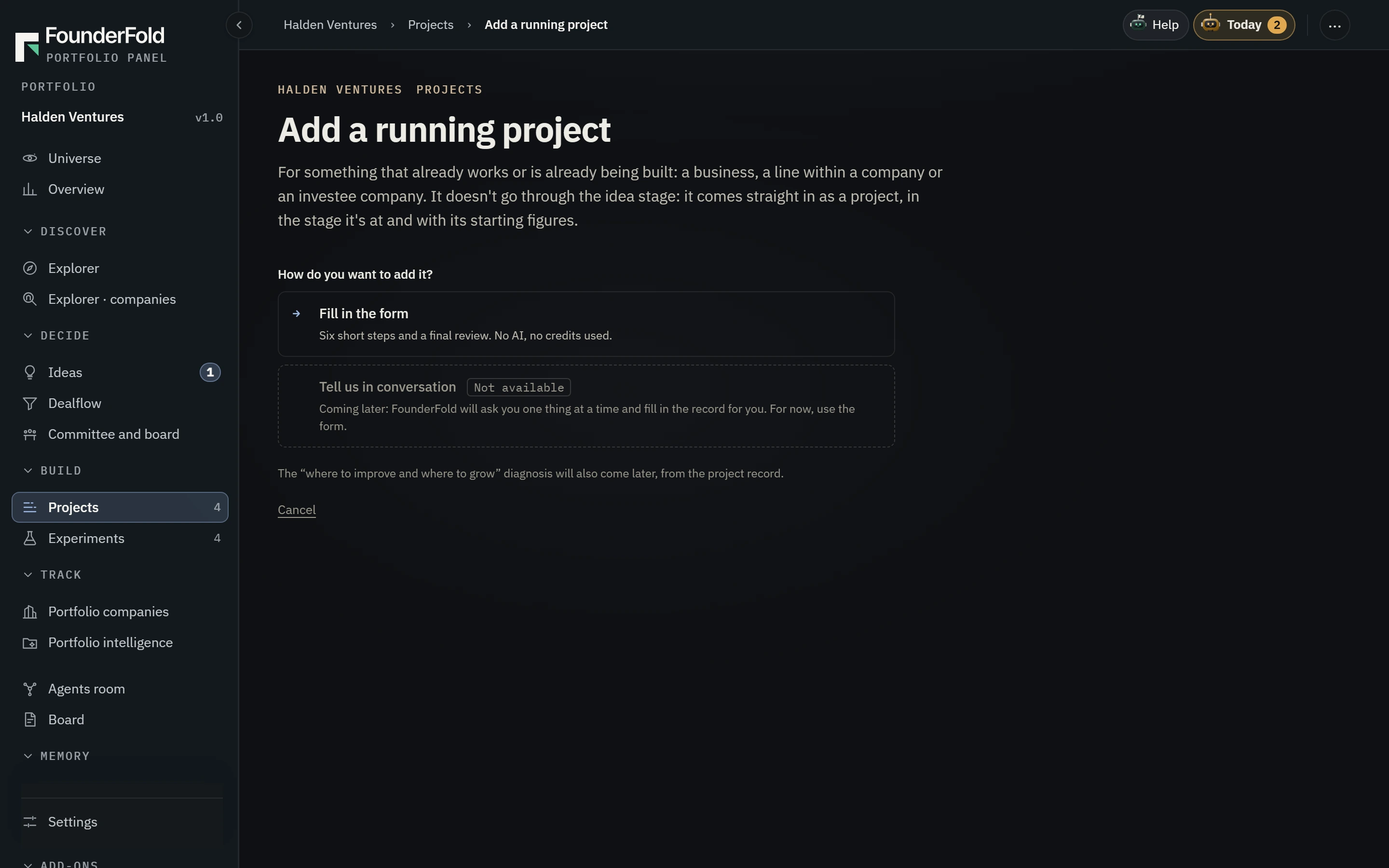
Add it as a running project
Hold the diagnosis
Illustrative data — Fictional company, ideas and figures, shown for illustration only.
Diagnosis conversation with the CEO about a fictional manufacturer: the question about customer concentration, the answer, and a summary of three facts, each with its source.
Turn it into a plan
Illustrative data — Fictional company, ideas and figures, shown for illustration only.
Improvement plan with two experiments, one idea for a new line and one child project, each with its owner and deadline, labeled “AI-generated” until a person confirms it.
Report to the board
What does FounderFold do in Grow?
In Grow, FounderFold follows businesses that are already running. You add a running project at the stage it has reached, a guided diagnosis conversation finds where it can grow, and the result becomes an improvement plan: experiments, ideas for new lines and child projects. The figures you record measure progress, and leadership reads it in the Board view, in board reports and in custom reports.
What you use in Grow
- Add a running project
Add a running project
Bring in a business that already works, at the stage it has reached, with its starting figures. Three details are enough to start; the rest can come later.
- Diagnosis
Growth diagnosis by conversation
The CEO asks about customers, offer, channels, margins and the market, one question at a time, and writes down what it hears, with the source of each fact.
- Improvement plan
Improvement plan
The diagnosis becomes a plan: experiments to run, ideas for new lines that enter the portfolio, and child projects with their own stages.
- Board
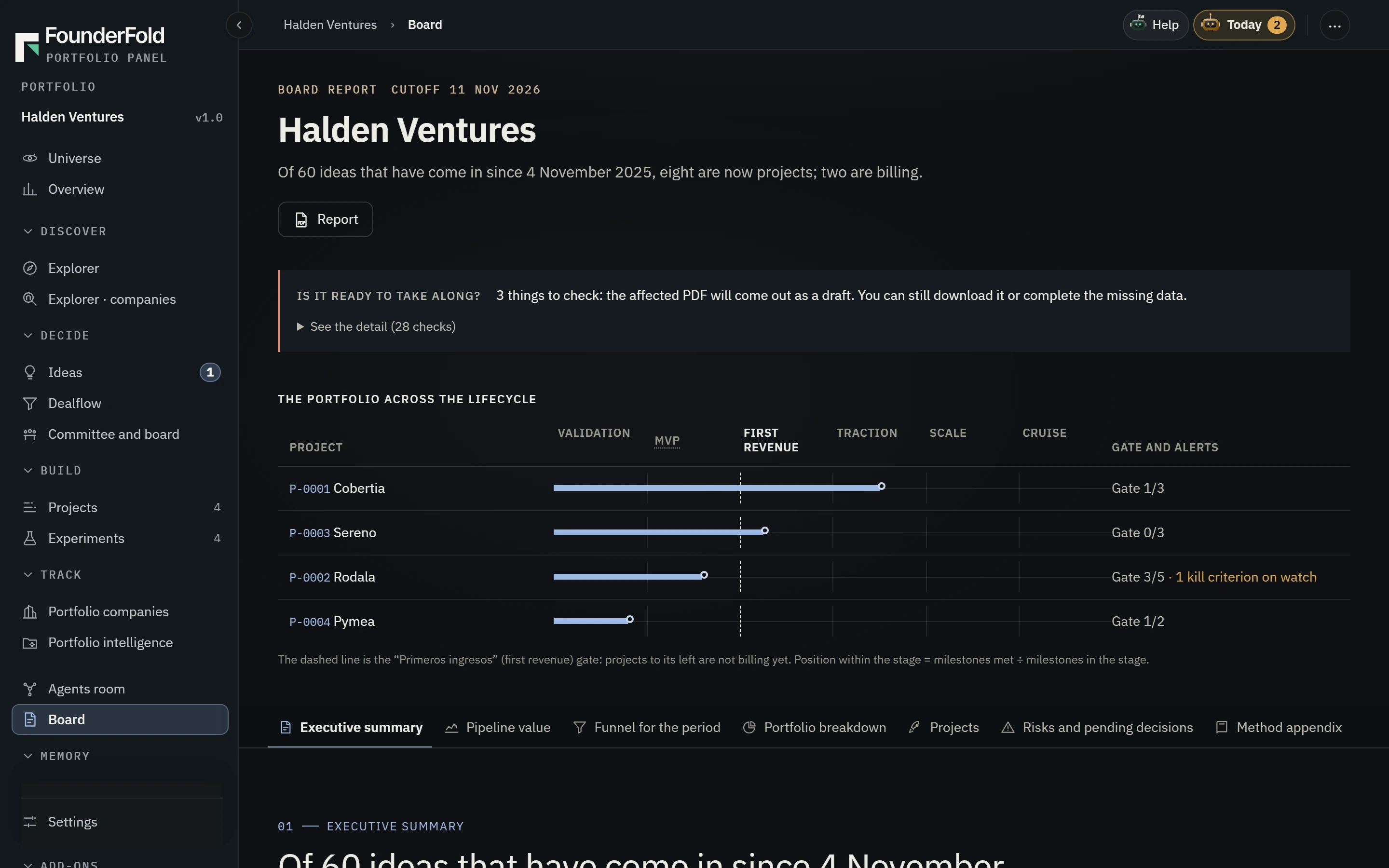
The Board view
The organization’s key figures, the sum of its portfolios and what needs deciding, most urgent first.
- Board report · Custom reports
Board reports and custom reports
A board report in portrait or board-deck layout, built by rules from the records, and custom reports you ask for in plain words, in English or Spanish. Both can be scheduled.
- People and permissions
Access by portfolio
Give the directors of a portfolio company, or a client, access to their own portfolio only, without the rest of the organization.
A packaging maker looks for its next line
Illustrative data — Fictional company, ideas and figures, shown for illustration only.
Ferrand Packaging, a fictional mid-sized manufacturer whose sales have been flat for three years.
Add it as a running project
The company enters at its Consolidation stage, with its revenue, its margin and the share of sales from its top five customers.
Hold the diagnosis
In a forty-minute conversation the CEO finds the pattern: 62% of revenue comes from five customers, and two of them are asking for refill and take-back services.
Turn it into a plan
Two experiments on the new services, an idea for a reusable-crate line that enters the portfolio, and a child project for the pilot that works.
Report to the board
Every month the board report shows the plan’s figures against their targets, and the decisions waiting for the board.
Before the growth diagnosis: four things to have at hand
A growth plan is only as good as the diagnosis behind it, and the diagnosis is only as good as its figures. This is what helps most in the conversation with the CEO.
Revenue and margin for the last three years
Enough to see whether the business is flat, growing or shrinking, and where the margin goes. They become the project’s starting figures.
Your top customers’ share of sales
Concentration is often the first finding: when five customers bring in most of the revenue, the plan usually starts there.
What customers ask for and you do not offer
Requests you have not answered, complaints that repeat, services competitors have added. The CEO writes down each one with its source.
Who will own each action
Every experiment, new-line idea and child project in the improvement plan has an owner and a deadline. Decide beforehand who can take them on, so the plan does not stall the week after.
The plan proposes. Leadership decides.
The diagnosis and the plan are proposals marked as AI-generated. Which experiments run, which lines open and which projects close are decisions of people, kept with their reason.
Who Grow is for
FAQ
Keep exploring
Can I use FounderFold for a business that already exists?
Yes. Add it as a running project at the stage it has reached, with its starting figures, and follow it with the same milestones, kill criteria and reports as a new one. Used this way, FounderFold is business growth plan software: the plan, its owners and its figures stay in one record.
What does the growth diagnosis ask about?
Customers and how concentrated they are, the offer, the channels, margins, competition and the market. It is a guided conversation, one question at a time, and every fact keeps its source.
What comes out of the diagnosis?
An improvement plan: experiments with a numeric criterion and a deadline, ideas for new lines that enter the portfolio, and child projects with their own stages.
Who sees a portfolio company’s figures?
Your organization, and the people you give access to that portfolio. Access by portfolio lets the directors of a company, or a client, see only their own.
Find the next stage of growth in the business you already have.
Early access is by invitation.